Symphoricarpos orbiculatus: Coral Berry, the Star of Autumn Floral Arrangements
Symphoricarpos orbiculatus — coralberry — adorns both the garden and floral arrangements with its vivid pink-purple berry clusters in autumn. A hardy, low-maintenance native shrub with real ornamental value.
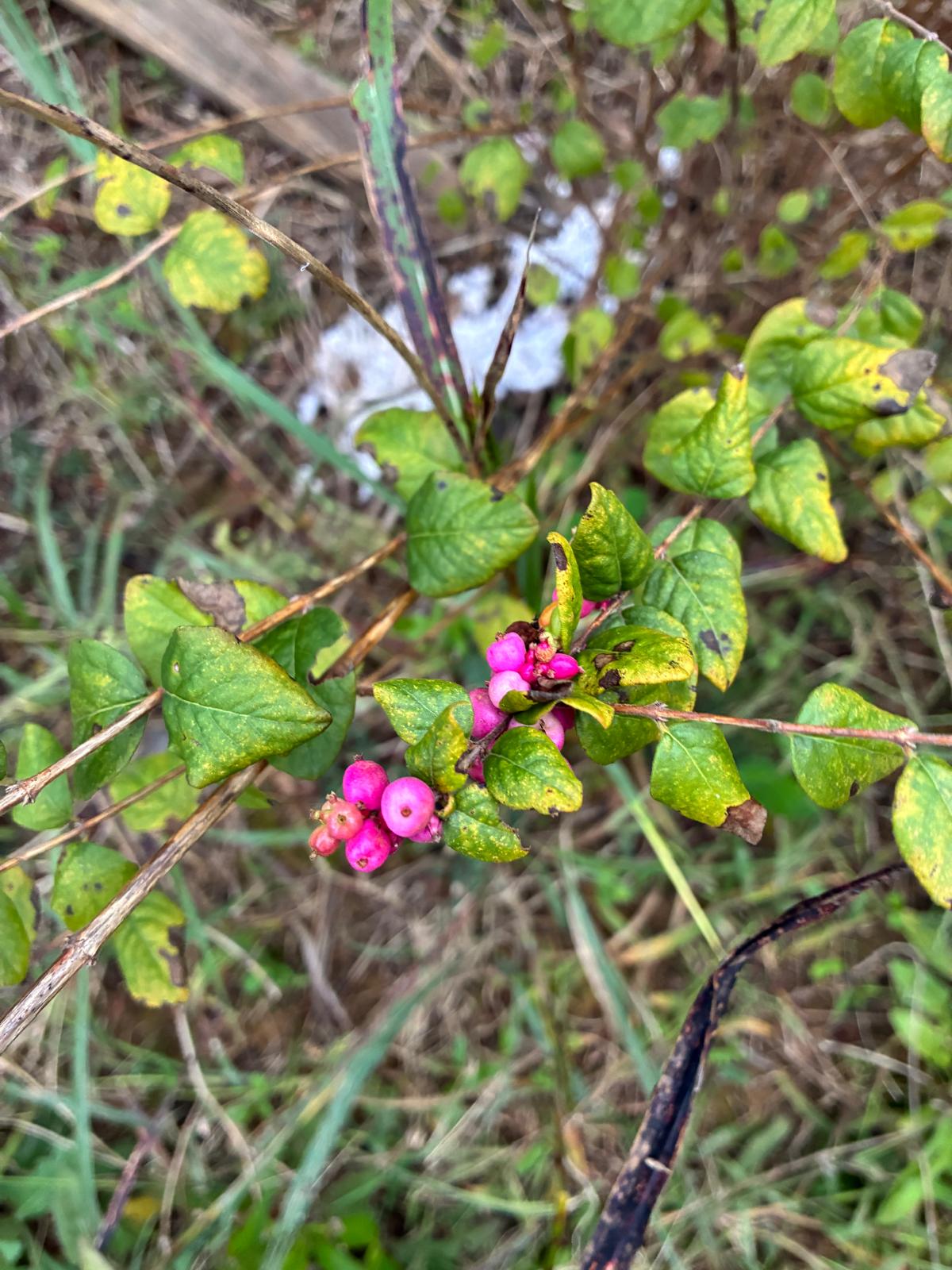
Some plants reach their finest moment in autumn. Symphoricarpos orbiculatus — coralberry — is exactly that kind of plant. As the leaves begin to fall, vivid pink-purple berry clusters are revealed along arching stems: small, round, abundant, and eye-catching. At HE-QA Garden we cut these stems for floral arrangements — they bring a completely different character to autumn bouquets.
What Is Symphoricarpos orbiculatus?
Native to North America, this shrub belongs to the Caprifoliaceae (honeysuckle) family. In the wild it grows along forest edges, valleys and riverbanks, with an exceptional tolerance for shade and partial shade. It reaches 1–2 m in height; its slender stems arch gracefully. Modest pink-white flowers open in summer, but the main event comes in autumn when the 5–8 mm coral-red to purple berry clusters ripen.
"Orbiculatus" is Latin for "round" — describing the fruit exactly. In English it is known as coralberry or Indian currant.
Ornamental Value
The standout use of Symphoricarpos orbiculatus is as a cut stem. Ripe berry branches add extraordinary texture and colour to autumn floral arrangements — and they last well in dried arrangements too. As leaves drop, the berry-laden stems alone remain decorative well into early winter.
Growing Conditions
Its greatest asset is shade tolerance — it performs from full shade to full sun, though berry production is best in sun or partial shade. It grows in clay, sand, rock, acid or alkaline soils; tolerates both drought and occasional waterlogging. Once established it needs almost no supplemental watering. It spreads by root suckers, forming small colonies — useful for erosion control and ground cover.
Wildlife Value
The berries are mildly toxic to humans but a valuable winter food for birds — thrushes, warblers and sparrows all enjoy them. The dense branching provides good shelter for small birds.


Comments
No comments yet. Be the first!
Leave a Comment
Your comment will be published after approval.