Rudbeckia hirta: Grown from Seed, Blazing Yellow-Red Beauty into Autumn
Rudbeckia hirta — Black-eyed Susan — is a wildflower that blazes with yellow-red flowers well into autumn, easily grown from seed and rewarding with almost no maintenance.
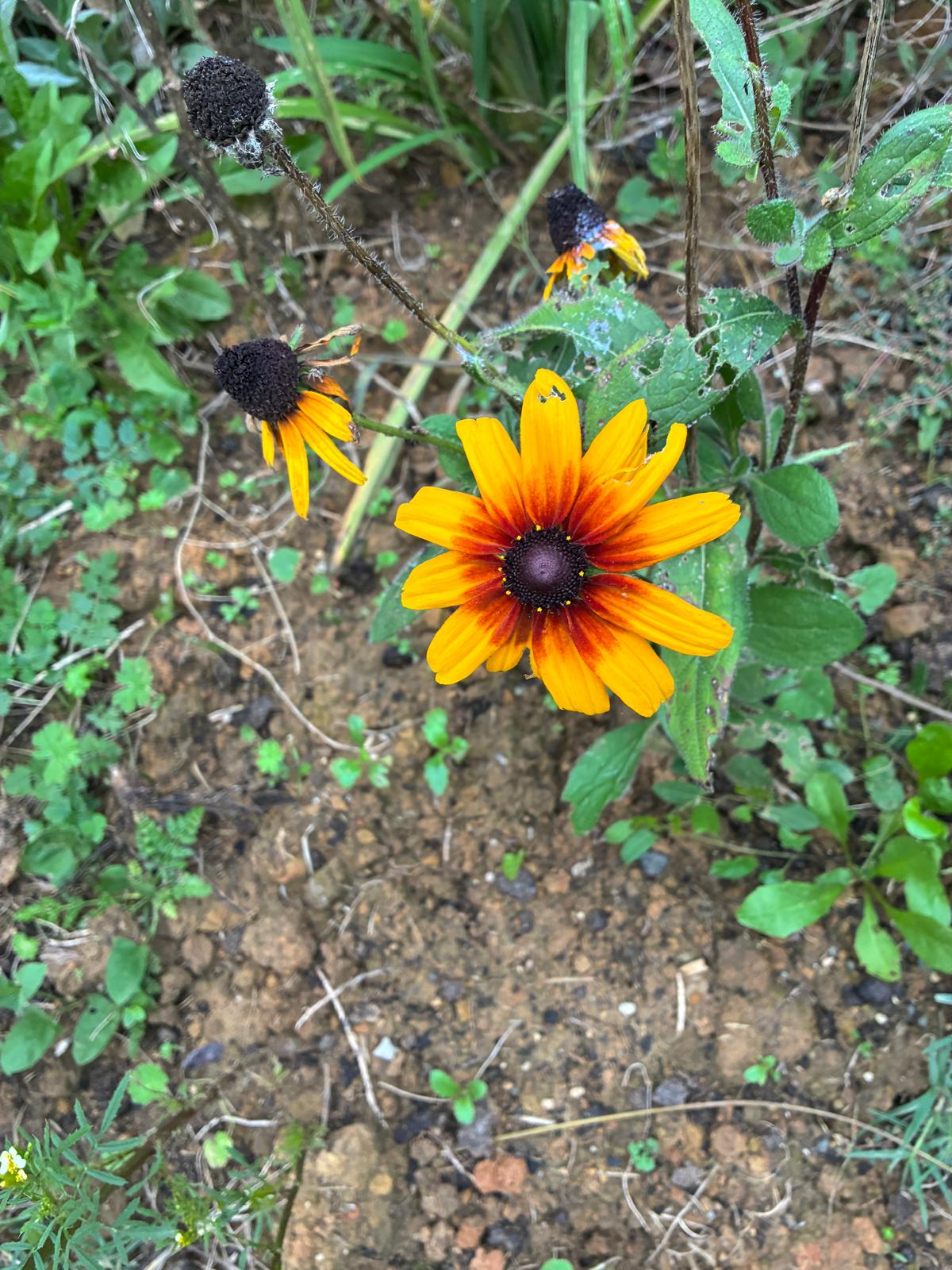
Some flowers feel even more rewarding when grown from seed. Rudbeckia hirta — Black-eyed Susan — is one of them. Starting from a tiny seed and seeing that deep red-orange bicolour flower open for the first time months later makes every bit of patience worthwhile.
What Is Rudbeckia hirta?
Native to the meadows and prairies of North America, this perennial (behaving as a biennial or short-lived perennial in some climates) is a robust member of the daisy family (Asteraceae). It grows 50–90 cm tall with a dark purple-black central cone and ray petals ranging from golden yellow to copper red. Some varieties — like the one in the photo — carry a deep red-mahogany ring at the base of the petals; this bicolour effect makes the plant particularly striking.
Growing from Seed
Rudbeckia hirta is one of the easiest perennials to grow from seed — no cold stratification needed, germination in 7–14 days. In the first year it forms a rosette; from the second year it flowers prolifically. Scattering the ripe seed heads over the garden is enough for self-seeding colonies to establish.
Growing Conditions
Full sun to light partial shade; 6+ hours per day is ideal. Thrives in poor, dry, well-drained soils — one of its greatest strengths. Rich soil produces more foliage and less flower. Drought-tolerant once established; excess moisture can cause root rot.
Long Flowering Season
Rudbeckia hirta's greatest asset is its flowering duration: from July through October and into early November. When most summer flowers have faded, Rudbeckia is still blazing — making it an essential component of the autumn garden.
Pollinator Value
The open central cone is an excellent landing platform for bees and butterflies. As a late-season bloomer it provides critical nectar when few other sources remain. The seed heads are eaten by finches and other seed-eating birds through winter.


Comments
No comments yet. Be the first!
Leave a Comment
Your comment will be published after approval.