Angel's Trumpet: Brugmansia and Its Pink Bell Flowers Blooming in November
Coming across drooping pink trumpet flowers in the garden in November is enchanting. Angel's trumpet Brugmansia takes winter frost damage but bounces back every spring to surprise us again.
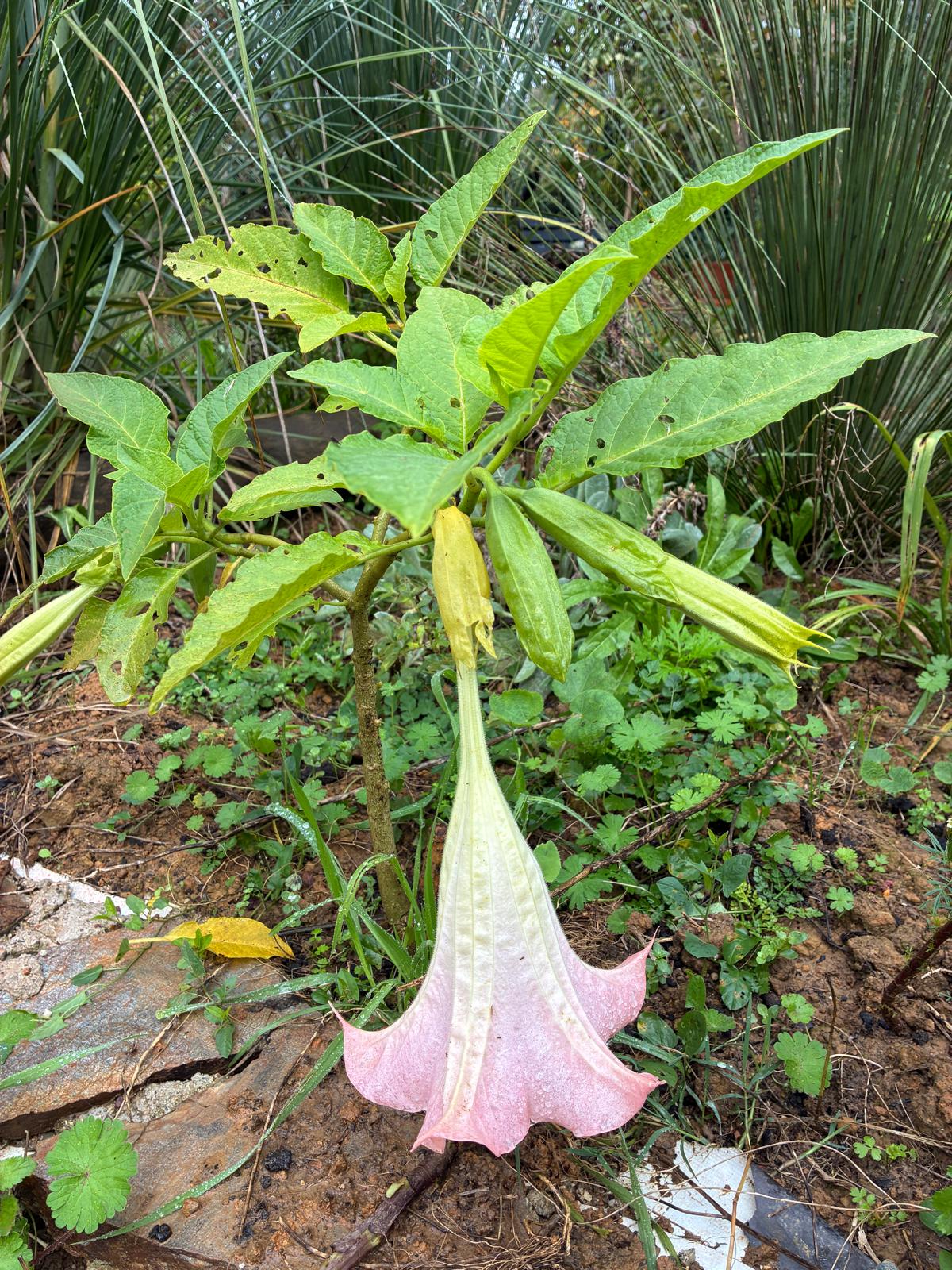
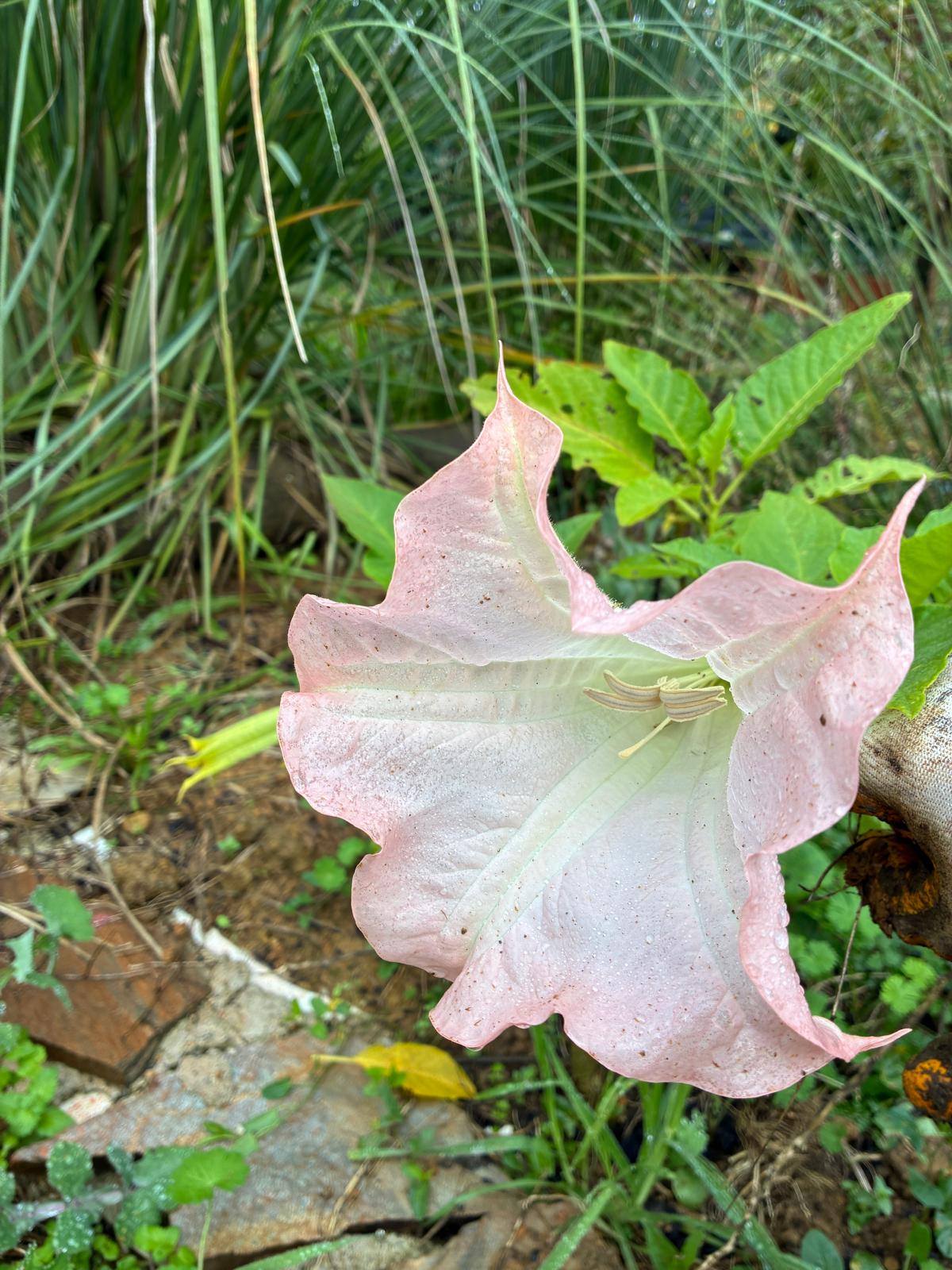
Coming across that large, drooping pink flower while walking in the garden in November — it's unlike anything else. Brugmansia, also known as angel's trumpet, earns its name: trumpet-shaped flowers up to 20–30 cm long, a sweet scent that intensifies in the evening, and a tropical appearance that makes it one of the most dramatic plants in the garden.
What Is Brugmansia?
Brugmansia is a subtropical shrub or small tree native to the cool highland regions of the Andes. It is closely related to Datura, the main difference being that Brugmansia flowers hang downwards (Datura's face upwards). It comes in yellow, white, orange, pink, and red varieties. Our pink cultivar looks especially beautiful after autumn rains.
How Does It Flower in November?
Brugmansia has a long flowering season from spring through autumn. As temperatures drop it usually slows, but in Sakarya's mild early November it can still be in bloom. Autumn rains often trigger new flower buds. This out-of-season flowering shows how well the plant has adapted to Sakarya's climate despite its tropical origins.
How Does It Handle Winter?
Brugmansia is cold-sensitive. Even the hardiest cultivars can only briefly tolerate temperatures around -5°C. In USDA zone 8 (which covers Sakarya), winter frosts can kill the upper growth and branches, but the root system stays intact and the plant reshoots in spring. Ours follows exactly this cycle: winter damage every year, new growth every spring.
Winter Protection Tips
- Base mulch: Apply a thick layer of organic mulch around the roots before winter to protect the root system.
- For container-grown plants: Bring indoors before temperatures drop below 10°C. It can overwinter in a dark, cool spot (around +5°C) with minimal watering.
- Pruning: Light pruning before winter is fine — don't worry, it will reshoot in spring.
- After frost: Cut back blackened stems in spring until you reach live tissue. New shoots will appear within a few weeks.
Caution: Toxic Plant
All parts of Brugmansia — leaves, flowers, seeds, and roots — are highly toxic. Do not ingest and wash hands after contact. Plant away from children and pets.
Why Grow It?
Despite the warnings, Brugmansia brings an unmatched tropical atmosphere to the garden, is easy to grow, and propagates readily from cuttings. That sweet, intense evening scent is an experience no other plant can replicate.


Comments
No comments yet. Be the first!
Leave a Comment
Your comment will be published after approval.