Japanese Banana
Fit with Sakarya: how well the plant suits the local climate (winter cold, humidity, summer heat). Risk Level: risk of loss from disease, pests or care. They are separate measures; a cold-sensitive but disease-resistant plant can be "Limited fit, Low risk".
Main Risk Factor
Stem damage in extreme winter cold; can be prevented with root insulation and mulch
Priority Action
In November cut the stem at 50–60 cm and cover the root zone with 20–30 cm of mulch
Note
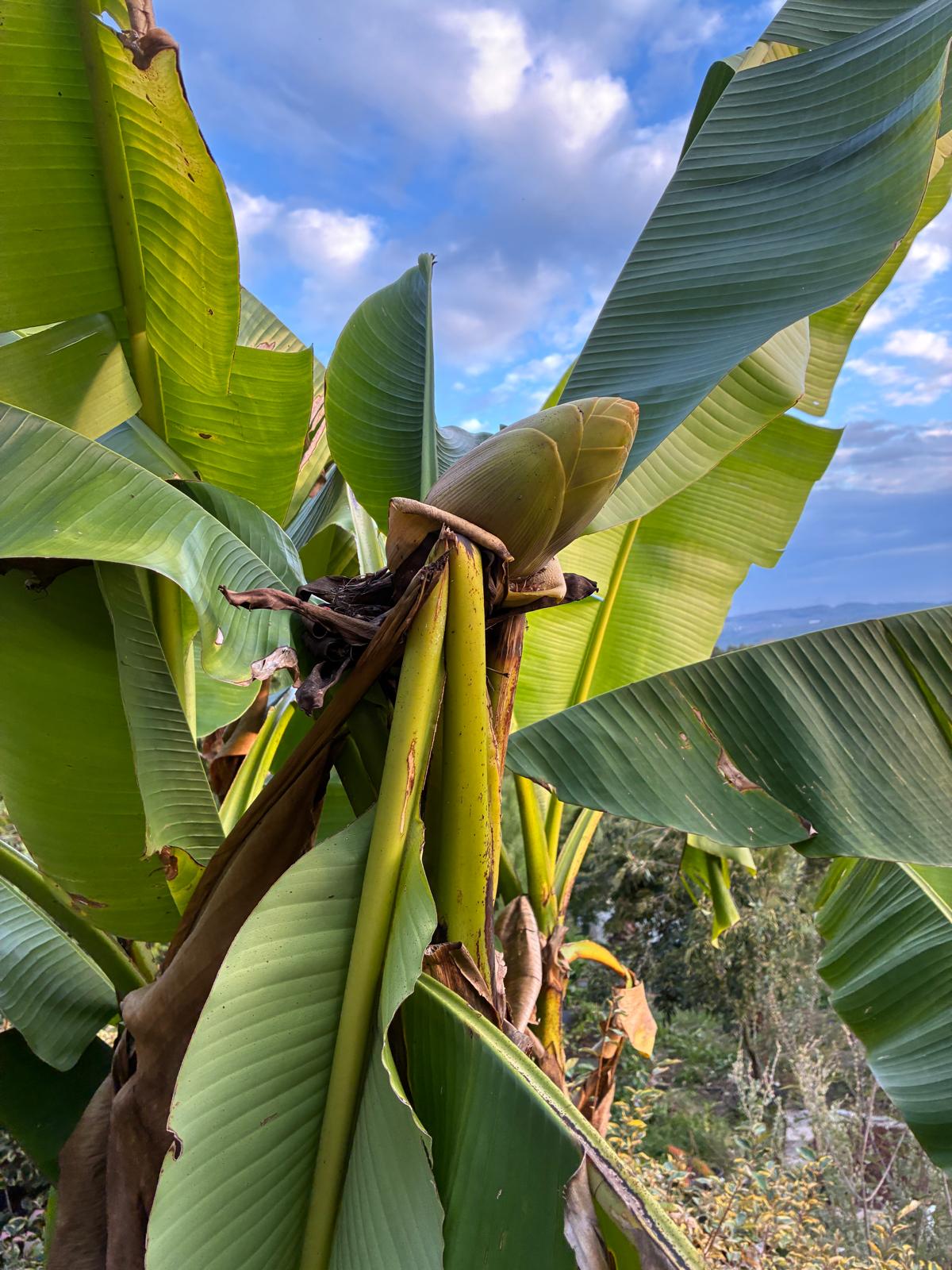
Native to Japan, the most cold-hardy banana species in the world. Not a commercial banana; its fruit is not edible and is full of seeds. Its real value is the tropical atmosphere, fast growth and toughness. The leaves die back every year and the stem resprouts from the root. It produces offsets and forms a clump.
🌱 From the Garden — Personal Notes
I planted it 5 years ago from an offset taken from another garden. With its offsets it has reached 10 stems, and I cut back the extras. In winter the leaves die but the stem remains. This autumn it flowered and set fruit for the first time — we can see tiny bananas but they aren't growing. (translated from Turkish)
